

GIANYAR, balitourismnow.com – Herbalova aims to foster a love of herbal plants. Medicinal plants, or ‘herbal remedies’, are plants that are beneficial for health and healing.
All parts of the plant, such as the leaves, roots, flowers, and seeds, can be used to alleviate illnesses and improve health. Medicinal plants are part of the traditional spices of the Indonesian archipelago, especially Bali.
The “Documenting Traditional Medicinal Plants in Guwang Village through Scanography” program originated from the idea of rediscovering and expanding children’s knowledge about the potential and benefits of plants around them.
This program is supported by the Cultural Heritage Conservation Center Region XV, which covers Bali and West Nusa Tenggara. The program is also designed to foster intergenerational communication, encouraging interaction between children and their parents and grandparents.
Children will indirectly learn about social interactions as they ask for plants from friends and neighbors, or collect plants they find while walking in the rice fields.
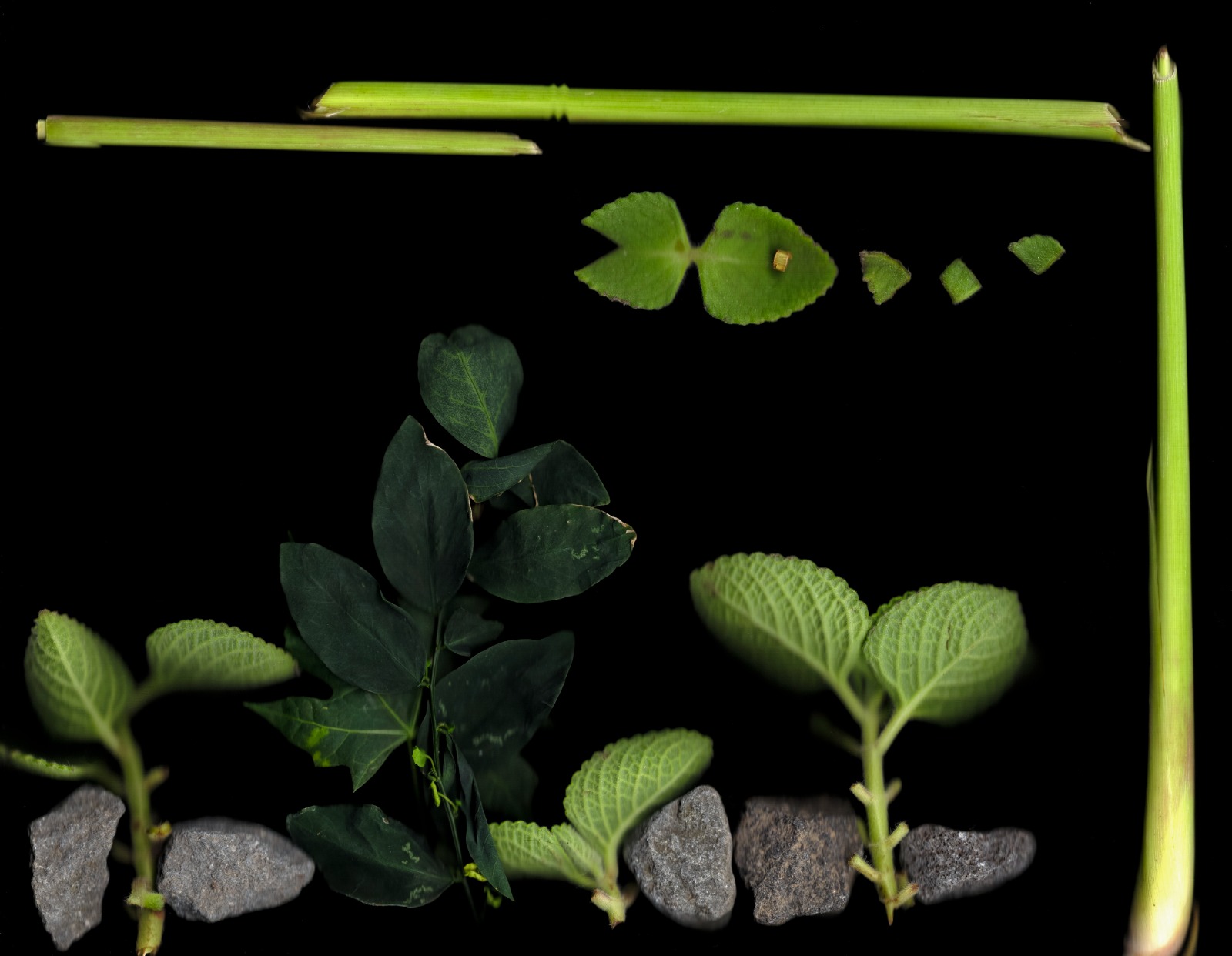
The method used in this documentation is scanography, the process of taking digital images of flat objects using a flatbed scanner, with the aim of creating printable artwork. This term is also known as scanner photography.
The Traditional Medicinal Plant Documentation Program, followed by an exhibition, was implemented in two stages: a workshop and an exhibition.
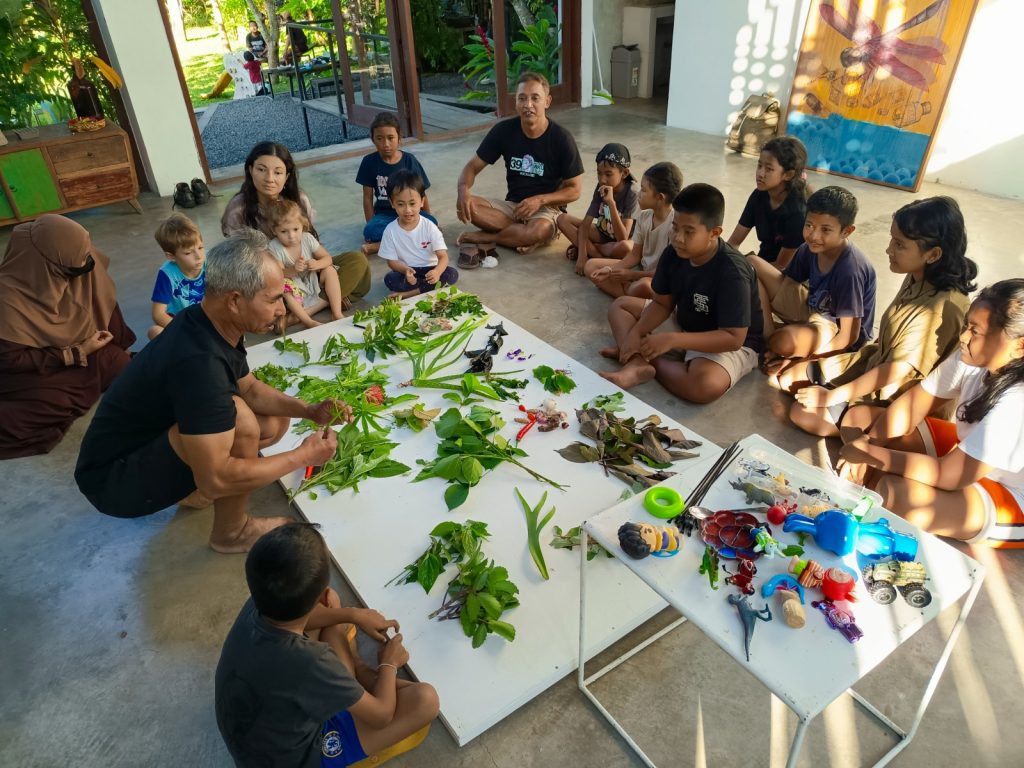
On the first day of the workshop, the children gathered in the Kulidan Space courtyard, where they were introduced to the program’s goal: collecting traditional medicinal plants they found while walking in the rice fields.
The walk was led by I Komang Adiartha and Mr. Landep, a farmer and local resident with valuable knowledge about herbal plants in the Kulidan Subak, Guwang Village.
Lanep learned about these plants by listening to stories from his father and other villagers. Landep had heard the names of many plants but didn’t know what they looked like.
To identify these plants, he often asked older villagers to show them. Landep told a story from his family: once they were cooking a vegetable dish that accidentally included a type of shrub that helps with bowel movements.
From that experience, he learned that the plant was called ‘Perdu Urus-Urus’, also known as ‘Kate Mas’ or ‘Daun Suduk Mentul’.
After completing the walk and discovering several herbal plants, the workshop continued with a presentation on scanning techniques and methods for documenting objects.
The event then continued with scanning the plants collected during the walk. Because plant documentation is linked to visual arts, children were encouraged to “play” by creatively arranging plants with toys they brought to the program.
The next day, the program continued with children bringing traditional medicinal plants from their own homes or from neighboring gardens.
This activity aimed to evoke memories of plants their parents or grandparents once used when they were sick or for preventative care.
One child shared how his grandmother made Loloh Kayu Manis (a traditional herbal drink made from cinnamon leaves) whenever she coughed or felt unwell. This activity also helped rekindle valuable communication between the children and their families.
The children were then guided to scan the plants they had collected and combine them with those brought by their friends to create artworks.
In addition to the plants they collected, the children were also free to forage for plants around the Kulidan garden. During the plant scanning process, the children were accompanied by mentor Vifick Bolang, a documentary photographer who became interested in scanning techniques during his residency in Yogyakarta.
Findings
The program, which involved 16 children, successfully identified approximately 50 types of medicinal plants found in Guwang Village, Sukawati, Gianyar Regency.
This was the initial phase, focusing on plant documentation. Information on their benefits was obtained from literature studies, both online sources and academic journals.
Applying this knowledge to actual medical prescriptions and practices will certainly require further research and expertise.
The Herbalia exhibition, where knowledge that was once scattered and oral, is now documented and visualized through a creative approach.
More than just an exhibition project, this activity reconnects children with their land, traditions, and communities, while also highlighting local values through a new visual language.
The Herbalia program is not just an art exhibition or documentation project—it is a meeting point between generations, traditions, and technology.
Through the children’s involvement and the use of scanning, herbal plants that once existed only in silence now have a voice through visuals and stories.
This program is a small step towards preserving the great heritage of ‘local knowledge that lives in Palemahan Village or living in harmony with nature according to the Tri Hita Karana philosophy.’ [rls]