

DENPASAR, balitourismnow.com – Dance can be a joyful way to introduce children to cultural diversity while nurturing positive character from an early age. This approach is being developed by lecturers from the Indonesian Institute of the Arts (ISI) Bali through the Nusantara Arts Innovation Program (PISN), titled “Implementation of an Innovative Nusantara Dance Model for Early Childhood: A Strategy to Strengthen Character and National Culture in the Digital Era.”
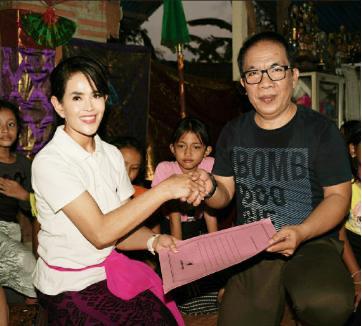
Funded by Diktisaintek 2026, the PISN program was carried out at Sanggar Tari Bali Nanta Kemara in Batubulan, Sukawati, Gianyar. The program was led by Prof. Dr. Ni Made Ruastiti, SST., M.Si., together with Dr. Arya Pageh Wibawa, S.T., M.Ds., Dr. I Nyoman Kariasa, S.Sn., M.Sn., and Dr. Gede Yoga Kharisma Pradana, S.Sos., M.Si. Established on January 14, 1988, the dance studio is headed by I Made Openanta, S.Sn., M.Pd.
Until now, dance training at the studio has focused mainly on Balinese dance. Meanwhile, children have had little opportunity to learn dances from other parts of the Indonesian archipelago. Limited teaching modules, costumes, accompanying music, documentation, and digital learning media have also posed challenges in expanding the studio’s learning materials.
“We have addressed these challenges by developing and implementing a child-friendly innovative Nusantara dance model called ‘Gerak Ceria Nusantara’, providing training and mentoring for children and studio instructors, preparing learning modules, producing accompanying music, providing dance costumes, strengthening documentation and digital promotion, and conducting a trial performance,” said Prof. Ruastiti on Monday, August 17, 2026.
Through Gerak Ceria Nusantara, the team adapts dance elements from several regions into a series of movements that are simple, safe, engaging, and appropriate for children’s motor and cognitive development. The repertoire includes Tari Bebek Putih Jambul from Bali, Tari Rantak from West Sumatra, Tari Jaipong from West Java, Tari Giring-Giring from Kalimantan, and material inspired by Tari Yamko Rambe Yamko from Papua.
The movements are simplified to make the dances easier for children to learn. However, the cultural identity and values embedded in each dance are maintained and translated into forms that are closer to the children’s world of play. In this way, children do not simply imitate movements; they are also introduced to the cultural diversity of Indonesia through movement, rhythm, expression, costumes, and floor patterns.
The performance is divided into five relatively short sections to suit children’s abilities and attention spans. Each section presents a distinct regional character before all the dancers come together in a single formation at the end. This meeting of different dance traditions offers a simple representation of Bhinneka Tunggal Ika, Indonesia’s spirit of unity in diversity, where different cultures can coexist without losing their individual identities.
The Balinese section features nine girls performing cheerful movements inspired by Bebek Putih Jambul. Hand movements resembling the flapping of wings, combined with footwork, changes of direction, and a V-shaped floor pattern, create an imaginative portrayal of ducks that is accessible to children.
Tari Rantak follows with more dynamic movements through changes in formations, diagonal patterns, and lines. The children learn to manage direction, distance, positioning, and group coordination. Tari Jaipong, meanwhile, provides greater opportunities to develop agility and expression through a selection of simplified movements.
In the Giring-Giring section, the use of small sticks adds a new kinesthetic experience. Movements involving raising and lowering the props, turning, walking on tiptoe, and forming circles are carefully adapted to ensure the safety and ability of the young participants.
The final section presents material inspired by Yamko Rambe Yamko from Papua. Girls and boys move through alternating formations, creating a sense of spatial dynamics and togetherness. The dancers from all five sections then come together, each retaining the cultural identity of their respective regions while becoming part of one composition.
This is where the program’s central message becomes most visible. Diversity is not merely explained to children through words; it is experienced directly through the process of dancing together. Children learn that differences in movement, music, clothing, and expression can exist harmoniously within a shared whole.
“Through this program, we have increased the variety of learning materials, improved the instructors’ skills, and strengthened the children’s courage to perform, discipline, teamwork, self-confidence, and awareness of Indonesia’s cultural diversity,” Prof. Ruastiti said.
The program also develops accompanying music, costumes, learning modules, video tutorials, and audiovisual documentation. The music is arranged with tempos and structures suited to children’s abilities while serving as a guide for rhythm, dynamics, and movement transitions during the performance.
Prof. Ruastiti explained that the program uses a participatory approach. The studio is not merely a venue for activities but is actively involved from the identification of needs and creation of the work to training, trials, evaluation, and utilization of the outcomes. ISI Bali students are also involved in choreography assistance, music, documentation, class management, and interaction with participants and parents.
Challenges remain, particularly in coordinating training schedules with children and their parents, accommodating differences in motor skills and concentration, and simplifying movements without losing their cultural identity. These challenges have been addressed through group division, repeated practice, intensive mentoring, flexible training schedules, and regular evaluation.
“Going forward, we aim to make Gerak Ceria Nusantara part of the regular training program at Nanta Kemara Studio. The team will also encourage the development of local instructor cadres, management of learning modules and digital media, intellectual property registration, and the development of performances or mini festivals as sustainable activities,” she added.
Prof. Ruastiti hopes that the model can eventually be adopted by early childhood education centers, schools, and other art studios. By combining tradition, character education, creativity, and digital technology, dance can become more than a performing activity. It can serve as a space where children begin to discover and appreciate the cultural richness of Indonesia.
Chairman of Nanta Kemara Studio, I Made Openanta, said that children who previously focused mainly on Balinese dance have now gained new experiences and are able to perform dance materials from various regions of Indonesia. “This will be a new experience for the children,” he said.
Ultimately, Gerak Ceria Nusantara offers a simple yet meaningful way to nurture diversity: inviting children to move together, appreciate differences, and discover that many cultures can grow and flourish within one shared space. [buda]