

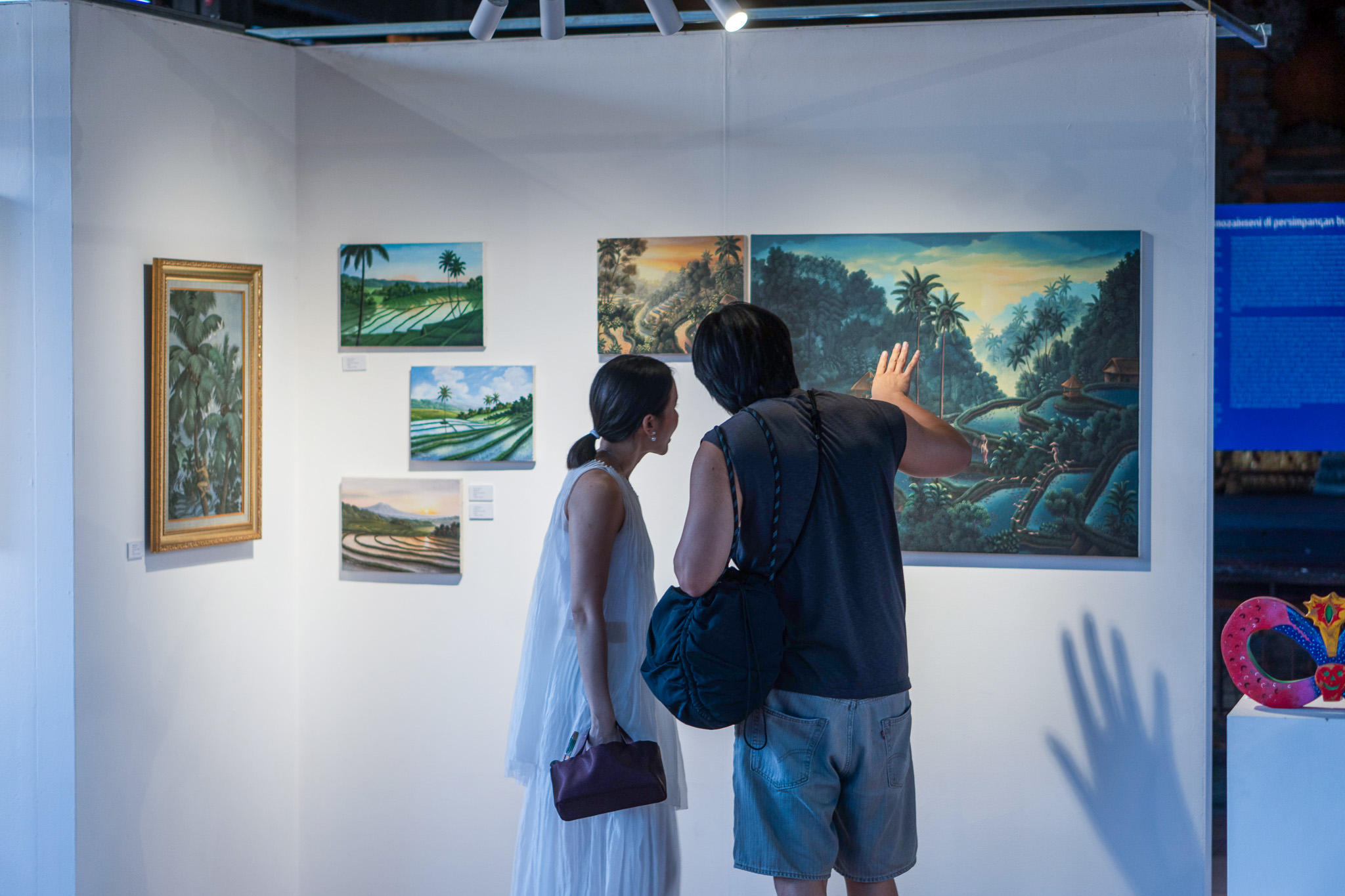
UBUD, balitourismnow.com — Ubud Art Collect was successfully held as a mini art market bringing together artists, galleries, studios, collectives, creative practitioners, and art enthusiasts in Ubud. Held over three days, from 4–6 September 2026, at Wantilan Ubud, located at one of the main intersections in central Ubud, the event showcased works by 39 artists from Ubud and its surrounding areas.
Throughout the event, Ubud Art Collect welcomed 4.863 visitors, who came to discover artworks, meet artists directly, and gain a closer understanding of the diverse artistic practices thriving in Ubud. The participating artists represented diverse backgrounds and artistic practices, ranging from traditional to contemporary art, bringing the breadth of Ubud’s artistic landscape together in one space.
For decades, Ubud has been recognised as one of Indonesia’s centres of art and culture, bringing together artists, writers, collectors, cultural practitioners, and visitors from around the world. As Bali approaches a century of tourism in 2027, Ubud Art Collect celebrated and reintroduced the diversity of artistic practices that continue to thrive in Ubud today.
Supported by Desa Adat Ubud, the event brought together artists from different generations, backgrounds, and artistic approaches, from Ubud painting traditions and the Batuan and Keliki styles, to the development of Young Artist in Penestanan and contemporary artistic practices that continue to evolve.
“Ubud Art Collect was envisioned as a less formal space where people could come, see artworks, speak directly with artists, and discover works they connect with. For us, the process of meeting and exchanging ideas is just as important as the transaction itself,” said Bagus Ari Maruta, Co-founder of Ubud Art Collect and an artist.
Gustra Adnyana, Co-founder of Ubud Art Collect, added, “Ubud has a long and rich artistic history, but what is particularly interesting is how its creative ecosystem continues to evolve and give rise to new practices. We want Ubud Art Collect to be a space that brings together different generations and approaches, while also making art feel more accessible and approachable to the public.”
Throughout the event, Ubud Art Collect brought together artists from different generations and artistic practices, representing the diversity of Ubud’s art ecosystem. Ketut Sumadi and Wayan Mandiyasa, twin brothers from Banjar Kutuh Kaja, Ubud, known as the “magic twins,” were among the artists who attracted considerable attention from visitors.
Their presence highlighted how personal character, connections between artists, and local traditions can become part of the public’s experience of engaging with art in Ubud. Another participating artist was Agung Dewi Monalisa, a female artist from Ubud who represents the continuity of Ubud’s artistic traditions through a painting style influenced by Walter Spies.
I Gusti Nyoman Darta, the grandson of Ubud art master I Gusti Nyoman Lempad, continues his family’s longstanding connection to Ubud’s artistic traditions through his work. The Young Artist generation is represented by Ngurah KK, who was directly mentored by Arie Smit, the Dutch-born master painter who settled and worked in Ubud.
From a more contemporary generation, I Made Arya Palguna presents a multidisciplinary practice that combines Balinese aesthetics and traditions with a contemporary perspective. Sakde Oka explores fabric, thread, sewing, and embroidery as the primary mediums of her practice, while Made Aswino Aji, representing the younger generation of Sika Gallery, brings experience in developing alternative art spaces and initiatives in Indonesia.
The diversity of Ubud’s artistic practices is further reflected in the presence of artists working within the Batuan tradition, including Made Griyawan and Aris Sarmanta, as well as the Keliki tradition through the work of Nano Ari. Other artists who live and work in Ubud also took part, including ceramic artist Sekarputi Sidhiawati, as well as Agugn and A Jasmine.
Their presence shows that Ubud is not only home to a long artistic history, but also to a creative ecosystem that continues to grow through artists who choose to live, work, and develop their practices in Ubud.
Over the three days, Ubud Art Collect created a space for artists and the public to meet, build connections, and deepen their appreciation of art, while supporting the sustainability of Ubud’s local art and creative economy. Direct encounters between artists and the public became an important part of the event, creating a more open and intimate atmosphere than that of a conventional art space.
More than a marketplace for artworks, Ubud Art Collect became a meeting point that highlighted Ubud as a living space for art and creativity, from traditions passed down across generations to contemporary practices that co ntinue to experiment and evolve. Through these encounters, the event also opened up conversations about how Ubud’s art ecosystem can continue to grow and develop in a changing world. [uni]