

MANGUPURA, balitourismnow.com – Bambu Indah, one of Ubud’s leading eco-friendly and luxury five-star resorts, recognized by TIME Magazine as one of the Best Places in the World and ranked by Tripadvisor as a Unique Hotel (No. 3 globally), is strengthening its commitment to sustainability and environmental preservation.
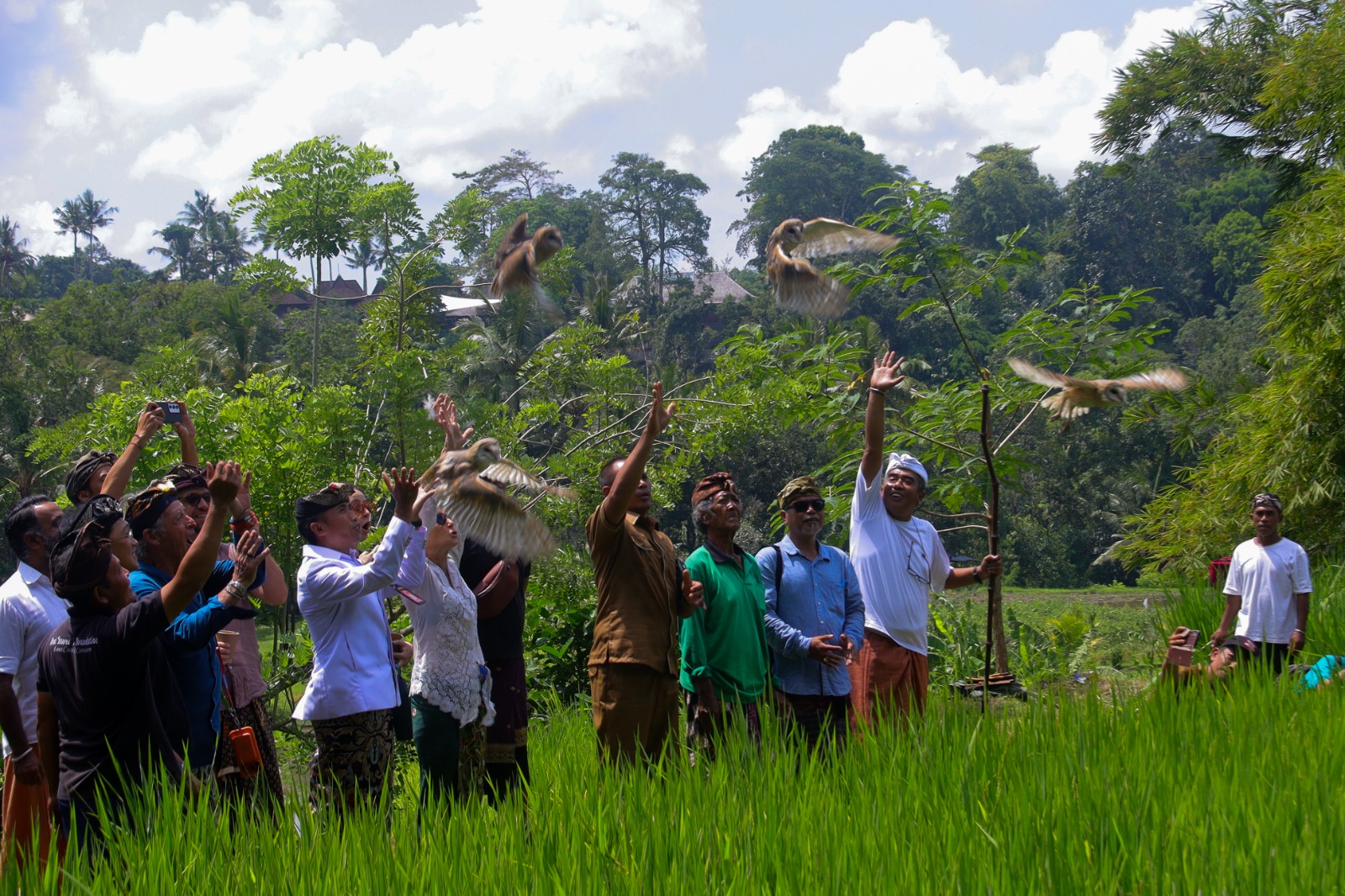
As proof, Bambu Indah held a ceremonial release of eight barn owls (Tyto alba) at Pura Dalem Wantilan in Bongkasa Village on Monday, April 6, 2026.
The initiative, led by Bambu Indah in partnership with Owl Tower Bali Foundation, introduces a natural and sustainable solution to managing rat populations in local rice fields, reducing reliance on chemical pesticides while supporting the region’s ecological balance.
Representatives and students from Udayana University were present to observe and learn, emphasizing the program’s educational and environmental significance.
The event was attended by Bambu Indah owners John Hardy and Cynthia Hardy, alongside their son Orin Hardy, and Bambu Indah Director Ratheesh Raj.
Also in attendance were local officials included Camat Abiansemal Ida Bagus Putu Mas Arimbawa S.Sos, Perbekel Bongkasa I Gusti Agung Sumajaya, Bendesa Bongkasa Ida Bagus Gede Sujia Pradanta, and Pekaseh Sengempel Bongkasa I Wayan Suambara, along with representatives from Subak and the Head of Owl Tower Bali as well as Astungkara Way.
Barn owls are natural predators of rats and are highly effective in controlling populations without harmful chemicals, protecting rice fields while preserving soil quality and the surrounding ecosystem.
“Rat poison often causes more harm than good, affecting not only pests but the broader environment,” said John Hardy. “By reintroducing natural predators, we are working with nature rather than against it.”
The initiative initially covers approximately 40 hectares of rice fields that have faced recurring crop losses in recent years.
According to Orin Hardy, the program is not just a technical solution but a broader effort to preserve Bali’s ecological and cultural heritage.
“The rice fields of Bali are more than scenic landscapes, they are living ecosystems and cultural expressions maintained through the Subak system for generations. As part of the tourism industry, we have a responsibility to protect what makes Bali unique,” he said.
The program’s success relies on collaboration with local communities, environmental organizations, and the next generation of leaders. Students from Udayana University observed the release to understand how sustainable practices can protect both harvests and biodiversity.
Community members are encouraged to safeguard the owls and their habitat, minimize disturbances, and avoid harmful practices that could threaten their survival.
Through initiatives like this owl release, Bambu Indah demonstrates how award-winning luxury hospitality can actively support environmental conservation, community empowerment, and the long-term preservation of Bali’s natural and cultural landscapes.
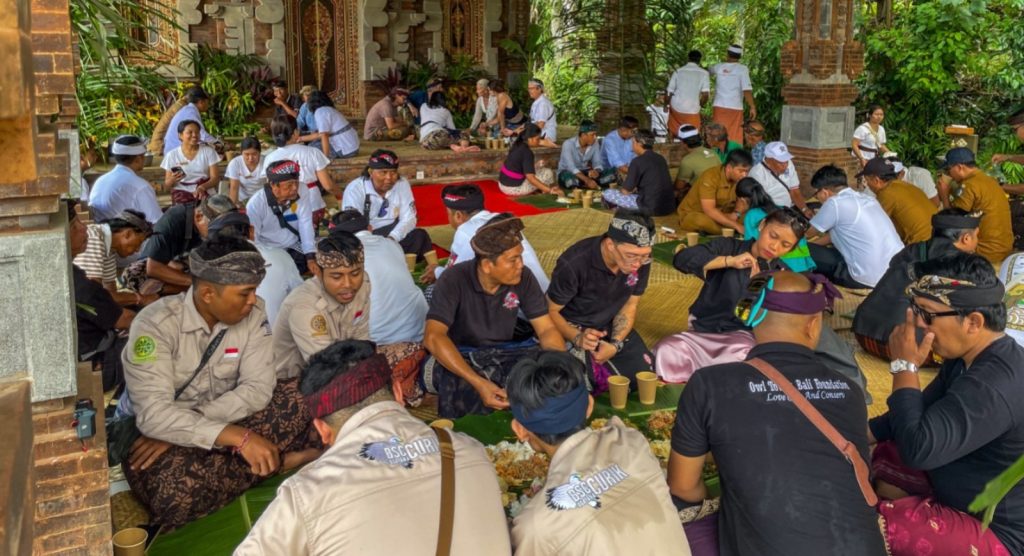
The event concluded with a megibung communal dining experience, symbolizing unity and shared responsibility among all participants. [*/buda]