

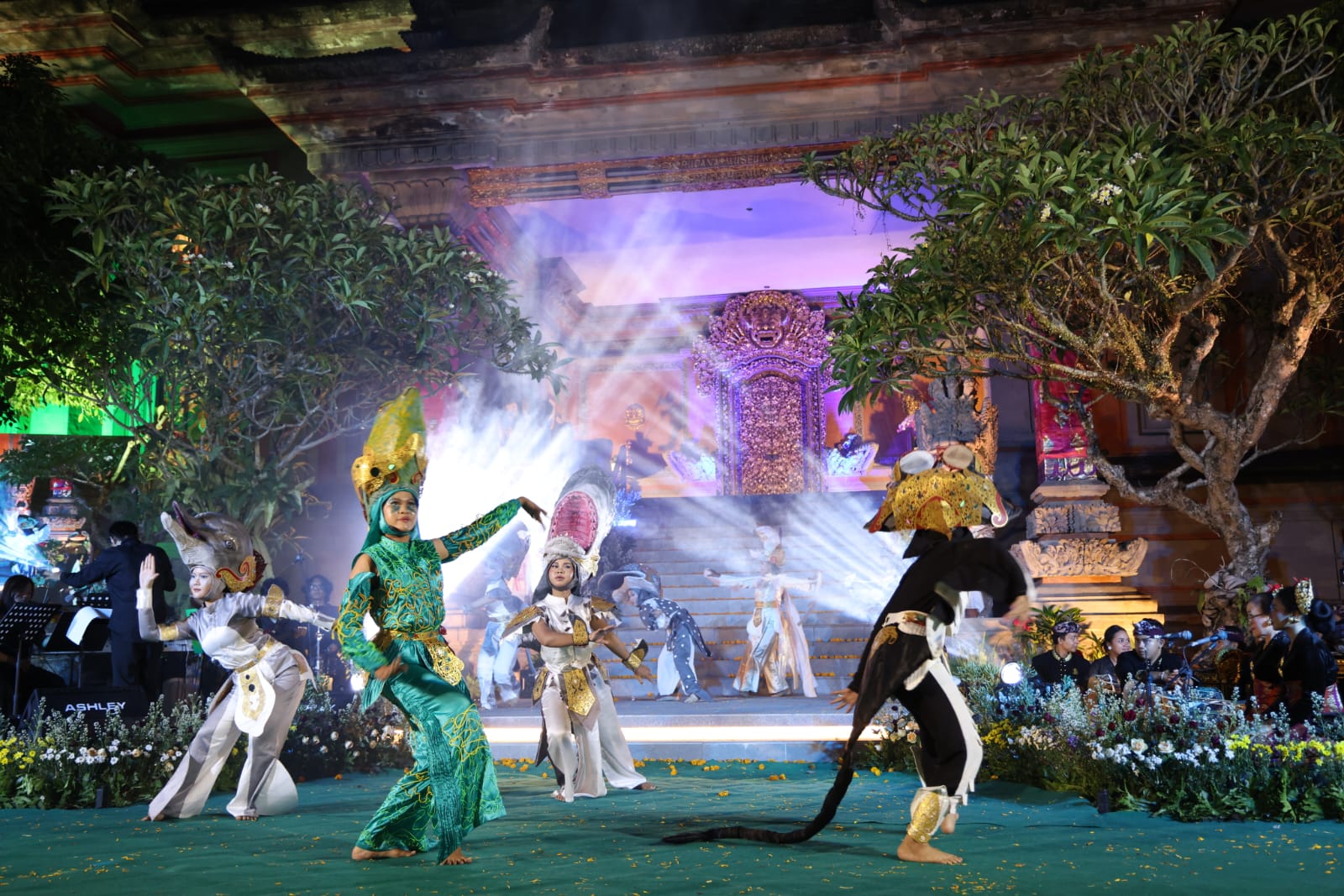
DENPASAR, balitourismnow.com – Huni-Jnana-Hana, an intermedia arts presentation, was held at Museum Rudana, Bali, on October 19, 2026.
Involving lecturers and students from the Indonesian Institute of the Arts (ISI) Bali, the project was part of the 2026 Arts and Design Lecturer Creation Program (P2DSD II), supported by an ISI Bali grant.
The event was presented as part of Setanggi Puspa Budaya, commemorating Indonesian Museum Day 2026, and coincided with the opening of Guwung Suwung, an exhibition by artist Wayan Kun Adnyana.
At the heart of the presentation was Huni, a work exploring human ecology through the relationship between people, their environment, culture, and space.
Principal investigator Dr. Ni Wayan Ardini explained that space is understood not merely as a physical setting, but as a relational environment shaped by human interaction and artistic experience.
Body, movement, music, voice, visual elements, and fashion were integrated to create a multidimensional performance.
The presentation featured four dance repertoires: Parapamor, Bianglala, Warunarupa, and Mina Bedhoyo. Choreographed by I Wayan Adi Gunarta, Ni Wayan Suartini, and Kadek Diah Pramanasari, the works combined Balinese and Javanese dance traditions with contemporary movement approaches.
Parapamor, performed by nine female dancers, explored presence and absence, reality and illusion through shifting formations, flowing scarves, and three conceptual phases: Hana, Tanhana, and Fatamorgana.
Big Band music contributed to the dramatic structure through changes in tempo, texture, and dynamics. Bianglala, featuring five dancers with long-tailed fans, explored transformation and continuity through colorful visual compositions and fusion music dominated by gamelan.
The program also incorporated a vocal performance by Timothy and Kamila, who presented “Kita Anak Bangsa,” alongside Gelatik, a fashion show featuring five female models.
These elements expanded the performance beyond dance, demonstrating how music, voice, movement, and fashion could interact as integral components of an intermedia experience.
The final dance works explored the relationship between nature and cultural tradition. Warunarupa, performed by eight female dancers, drew movement inspiration from marine life, evoking the diversity and harmony of underwater ecosystems.
Meanwhile, Mina Bedhoyo, performed in Javanese-inspired classical costumes, combined Javanese dance with Balinese gamelan elements. Together, the works traced an artistic transition from the marine environment to the grandeur of the royal court, highlighting cultural dialogue and transformation.
Through the integration of diverse artistic forms, Huni positions space as an active dimension of human experience, shaping identity, relationships, and interactions with the surrounding world.
As Ardini emphasized, each medium carries its own artistic and conceptual function in expressing the relationship between humans, the body, the environment, and space.
Ultimately, the performance invites audiences to reflect on humanity’s place within an interconnected and continually changing ecological and cultural landscape. [buda]