

TABANAN, balitourismnow.com – Nakula, one of Bali’s leading hospitality management companies, is taking another step toward reshaping hospitality on the island, this time with sustainability at the forefront.
The 100% Indonesian-staffed company has launched its first official sustainability pilot at Amarta Beach Retreat in Tabanan.
The initiative brings together climate-responsive design, environmental innovation, and community engagement, establishing a scalable model for responsible tourism.
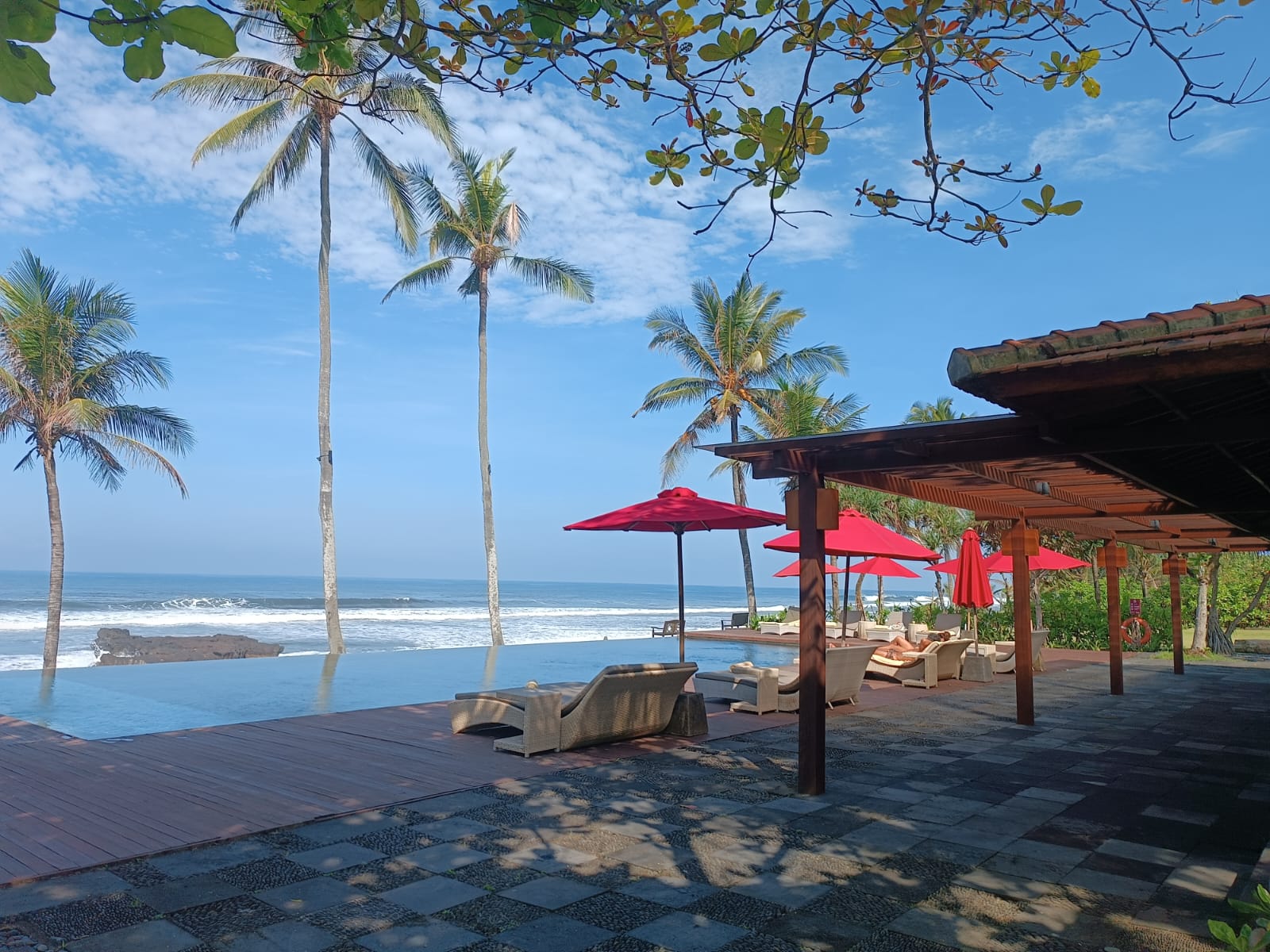
Set along a 12,000-square-metre stretch of black sand coastline, with only 40% of the land developed, Amarta reflects Nakula’s sustainability ethos with a strong focus on zero-waste practices.
[irp]
Central to this commitment is a partnership with Z Bio, a Bali-based biotech start-up that transforms food waste into high-protein livestock feed and organic fertilizer using black soldier fly larvae.
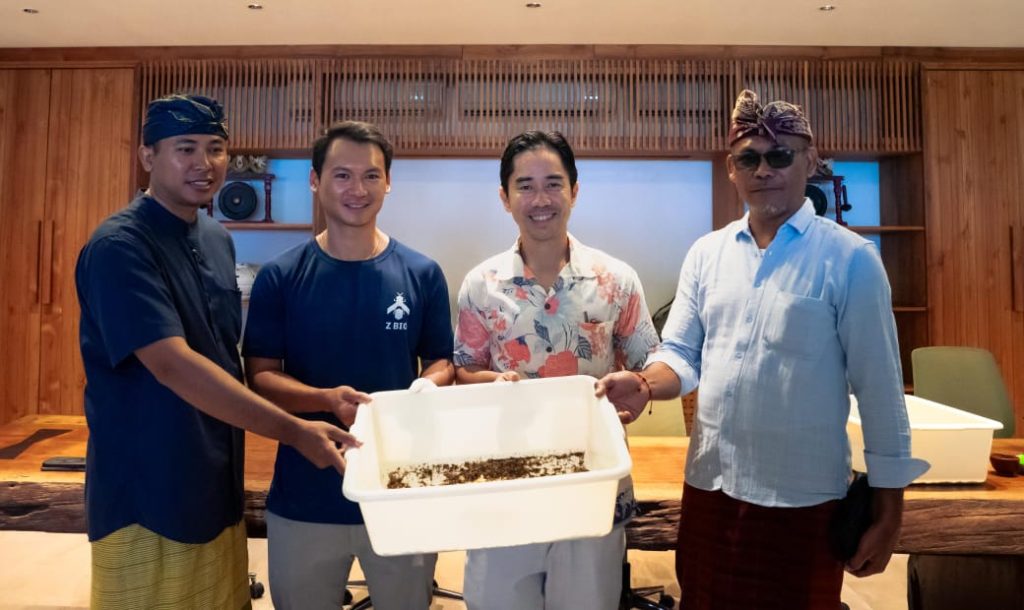
Amarta has also partnered with the local village, Desa Tibubiu, to expand organic waste management through farming of the larvae.
The village is leading community outreach to encourage residents and local businesses to contribute food waste to Amarta’s organic waste bank, fostering a circular and sustainable system beyond just the property into the community of Desa Tibubiu.
Since partnering with Z Bio, Amarta has sustainably managed over 1 ton of food waste from December 2024 to June this year.
[irp]
This initiative has not only diverted organic waste from landfill but also avoided an estimated 2.1 tons of CO₂-equivalent greenhouse gas emissions, contributing to the resort’s broader commitment to environmental responsibility.
Beyond Amarta, Z Bio currently processes around 2 tons of food waste per day from its partnerships across Bali, producing approximately 300 kilograms of climate-positive livestock feed daily.
The start-up is on track to scale this capacity to 12 tons per day by December 2025, underscoring the potential of the black soldier fly solution to make a measurable impact at the island level.
“We hope to inspire fellow businesses in Tabanan, across Bali, and throughout Indonesia to explore the potential of the black soldier fly solution,” says Christian Sunjoto, CEO of Nakula.
[irp]
The Bali-based hospitality management company launches its first sustainability pilot, reinforcing a long-term commitment to community impact, innovation, and more mindful travel.
“It’s a practical, proven way to manage food waste more responsibly. We also hope the government can help support this growing movement and start looking at food waste on a bigger scale—starting from Tabanan—so we can shift behavior together,” explained Christian Sunjoto.
Beyond tackling food waste, Amarta also invests in clean energy. In partnership with InniSolar, the resort has installed 45.8 kWp of solar panels, generating ~60,000 kWh annually and cutting over 55,000 kg of CO₂.
Of this, 19.4 kWp was supported by the Sustainable Energy Fund (SEF), a program backed by Indonesia’s Ministry of Energy and Mineral Resources and UNDP.
[irp]
With upcoming expansions, capacity will reach 72.4 kWp by 2025, producing around 100 MWh each year. At the same time, smart architectural design maximizes natural light and airflow.
Guests also experience a single-use plastic-free stay, with refillable amenities provided throughout the resort, a policy in place across Nakula’s portfolio of 77+ properties.
“Bali faces a major waste challenge, from plastic to organic. It’s a shared responsibility, and if each of us does our part, together we can make a real difference,” says Christian.
As with all Nakula properties, Amarta prioritizes people over profits. An impressive 90% of the team are hired from Tabanan, while 20% of perishable goods are sourced from the surrounding area, with the rest originating from elsewhere on the island.
[irp]
The resort also supports cultural programming, including traditional dance practice sessions for local youth, regular cultural entertainment from artist community Sanggar Seni, and by hosting the art and cultural event, Amarta Art Festival.
“Social and cultural sustainability matters just as much as environmental sustainability. If our people can’t live decent lives, no one will care about the trash,” adds Christian.
As Nakula looks ahead, internal motivation remains strong. “Measuring our contribution to preserving the environment motivates us to do better,” says Christian. “It helps the whole team see the impact of their daily actions.”
While Amarta is Nakula’s first dedicated sustainability pilot, it will not be the last. The team is already exploring how these principles can be adapted across its broader portfolio, including standalone villas, with the understanding that meaningful change must be locally-led and shaped by long-term partnerships.
[irp]
“If we want tourism to thrive, we have to protect what makes Bali worth visiting,” Christian concludes. [buda]