

GIANYAR, balitoursimnow.com – Three artists — Djunaidi Kenyut, Shinta Retnani, and Boel Vadag — come together at Biji Art Space to present a collaborative exhibition titled Roots & Routes.
Running from May 3 to June 2, 2026, the exhibition showcases a series of visual works that open a dialogue on how human beings shape, negotiate, and interpret identity.
Amid the increasingly fluid landscape of contemporary art — where artistic practices continue to transcend conventional boundaries of medium — Roots & Routes offers a reflective space that explores identity, memory, and the human journey.
Through distinct yet interconnected approaches — symbolic, documentary, and poetic — the three artists create an artistic experience that moves between cultural roots, personal histories, and the complexities of contemporary life.
auto_awesome
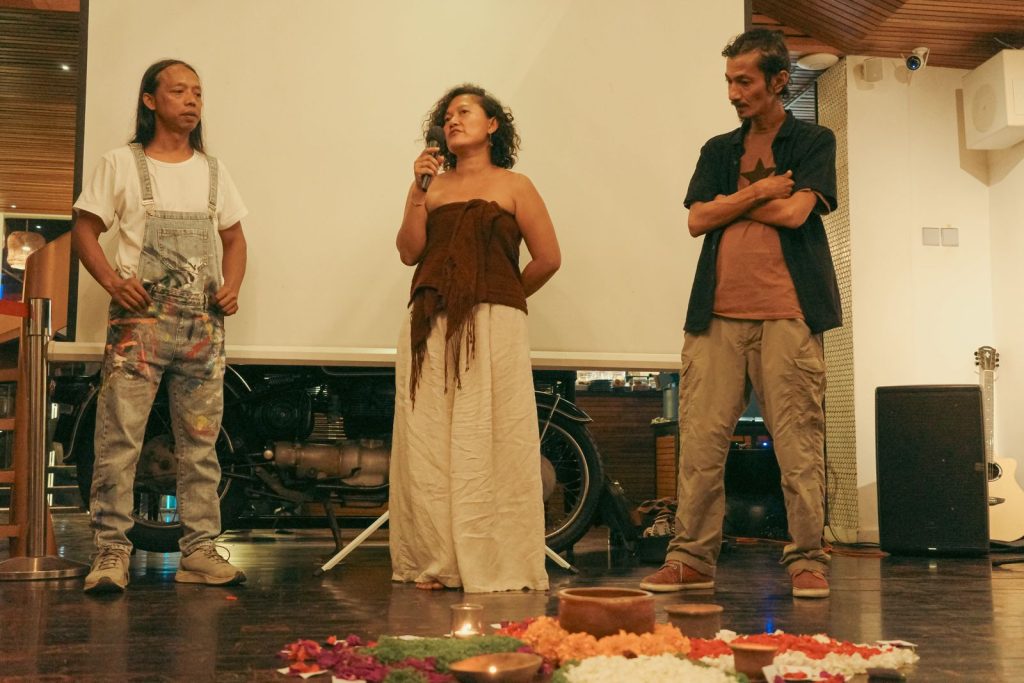
Did you mean: Tiga seniman: Djunaidi Kenyut, Shinta Retnani, dan Bool Badag gelar pameran lukisan di Biji Art Space/Foto: ist
114
Three artists: Djunaidi Kenyut, Shinta Retnani, and Boel Vadag held a painting exhibition at Biji Art Space/Photo: ist
In his practice, Djunaidi Kenyut presents works centered around the cactus, a visual symbol that has long become integral to his artistic exploration. Here, the cactus appears not merely as an ornamental form, but as a metaphor for human resilience: the ability to endure harsh, unfamiliar, and uncertain conditions.
Beyond his individual practice, Djunaidi also emerges as a catalyst for collective energy, fostering an open and dynamic space for collaboration.
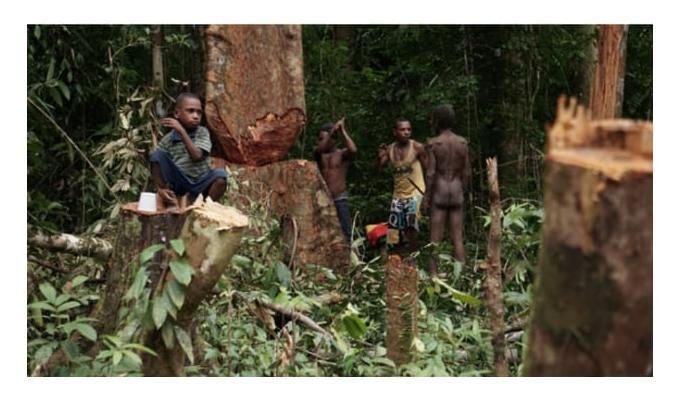
In contrast to this symbolic approach, Shinta Retnani brings documentary experience into the realm of contemporary art. Drawing from her extensive journeys documenting communities across Indonesia — from the Orang Rimba in Sumatra and the Korowai in Papua to the Lamalera community in Flores — she presents works that are both intimate and deeply reflective.
Through photography, journal writings, and installations, Shinta reveals how art can function as a medium for preserving lived experiences, cultivating empathy, and engaging with social realities on a profoundly personal level.
Meanwhile, Boel Vadag moves through a more intuitive and poetic territory. Poetry serves as the starting point of his creative process before transforming into visual forms that are spontaneous and emotionally charged.
Within his works, the boundaries between consciousness and intuition become increasingly fluid, creating visual experiences that remain open to multiple interpretations.
These three artistic approaches converge in large-scale collaborative works such as Roots Correspondencies and In Between, The Seen and The Unseen. In these pieces, the artists’ visual identities no longer stand independently; instead, they dissolve into a layered and complex visual conversation.
Collaboration here is not merely about merging styles, but about constructing a dialogical space where differences become the source of new creative energy.
Conceptually, Roots & Routes revolves around two central ideas: roots and journeys. “Roots” are understood not as something static or romanticized, but as living memories that continue to move and shape human consciousness.
Meanwhile, “routes” are interpreted as life journeys — processes of searching, choosing, and navigating intersections that continuously redefine the direction of one’s life.
Through its poetic and reflective approach, the exhibition does not attempt to offer a singular or linear narrative.
Instead, the works inhabit liminal spaces: pauses, uncertainties, fragments of memory, and possibilities of futures yet to fully emerge. Visitors are invited not only to observe the artworks, but also to enter an emotional landscape and reconsider their own position between origin and journey.
More broadly, Roots & Routes also reflects the increasingly open nature of contemporary Indonesian art toward interdisciplinary practices and collaboration.
The encounter between documentary, symbolic, and poetic approaches within a single space signals an important shift in contemporary art — from singular narratives toward a multiplicity of experiences and perspectives.
Ultimately, the exhibition does not seek to provide definitive answers. Rather, it opens new possibilities and invites the public to contemplate a simple yet profound question: to what extent are human beings defined by their roots, and to what extent are they shaped by the journeys they undertake?
The exhibition also marks part of a broader artistic trajectory, as the participating artists are scheduled to continue their international journey through an exhibition in Mongolia in July 2026. [I Gede Made Surya Darma]