

GIANYAR, balitourismnow.com – The sound of a flute fills the air as Genjek Pondok Pekak from Ubud opens its performance. The performers move with strong expressions, dressed in red udeng headcloths, saput poleng, dark sarongs, and bare-chested. The men sit cross-legged while the women kneel on a circular stage surrounded by a pool.
Their voices imitate the sounds of various Balinese gamelan instruments, including the kendang, cengceng, reong, and sir. The flute adds a melodic layer, enriching the distinctive vocal sound of genjek.
The performance by seven male genjek performers, five female performers, and five male gamelan musicians opened Ubud FolkFest 2026 at Biji World, Ubud, on Friday, August 14, 2026.
Genjek is more than music. Humour, social messages, and criticism are delivered in a light and playful manner. During the pengecet section, a female performer even invited the audience to dance and sing along, immediately breaking the barrier between performers and spectators.
This atmosphere reflects the spirit of Ubud FolkFest, which entered its fifth year in 2026. Held on August 14–15, the festival brings together music, art, culture, and communities in an open and relaxed setting.
Following the opening performance, the festival featured a diverse line-up of musicians and artistic groups, including Orasare, Abink Ferry, Celticroom Bali, Kerta Art, Tarawangsa, Ary Juliyant, WLBY, Iksan Skuter, Navicula, and Managona. Musicians from Bali, other parts of Indonesia, and overseas brought a wide range of musical styles to the festival.
Music, however, is only one part of Ubud FolkFest. The festival also features art exhibitions, cultural performances, workshops, children’s activities, an art market, a record store, and a drum circle. Participating artists include Made Bayak, Daniel Kho, Linkan Palenewen, Putu Eni, Dedi Junaedi, I.B. Rekha, Ayu Sri Rejeki, and Sofiya Shukhova.
These activities turn the festival into more than a place to watch performances. Visitors are also encouraged to learn, experiment, and engage directly with art.
Art That Is Practiced
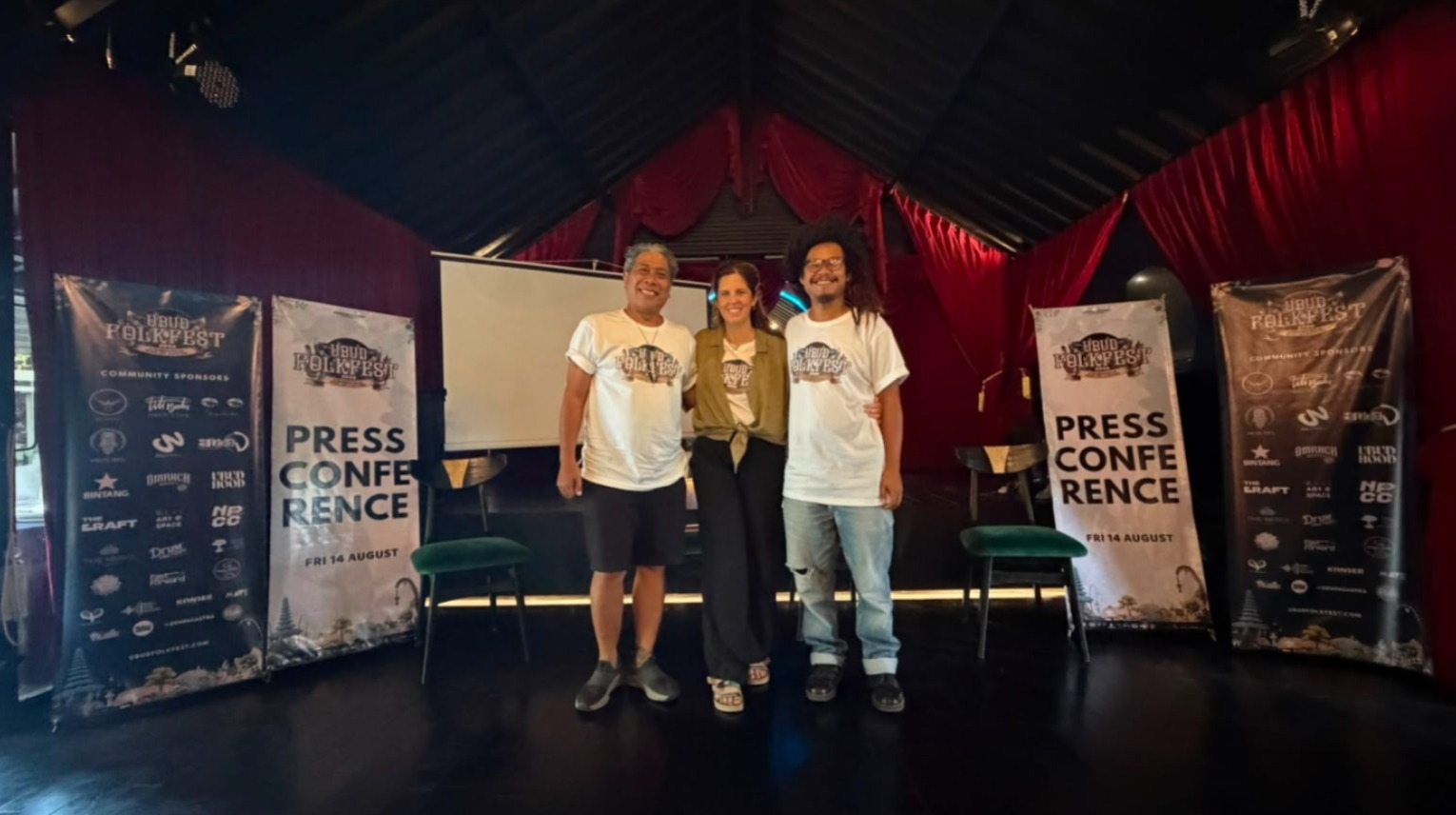
For Ubud FolkFest co-founder Sarah Hadi, the festival grew from a desire to keep Ubud’s creative spirit alive.
She said Ubud FolkFest was never built with the ambition of becoming a large-scale festival. More importantly, it seeks to build and strengthen its community.
“People meet here and make friendships; some of us have even found lifelong friends through this festival. That is something truly special,” she said.
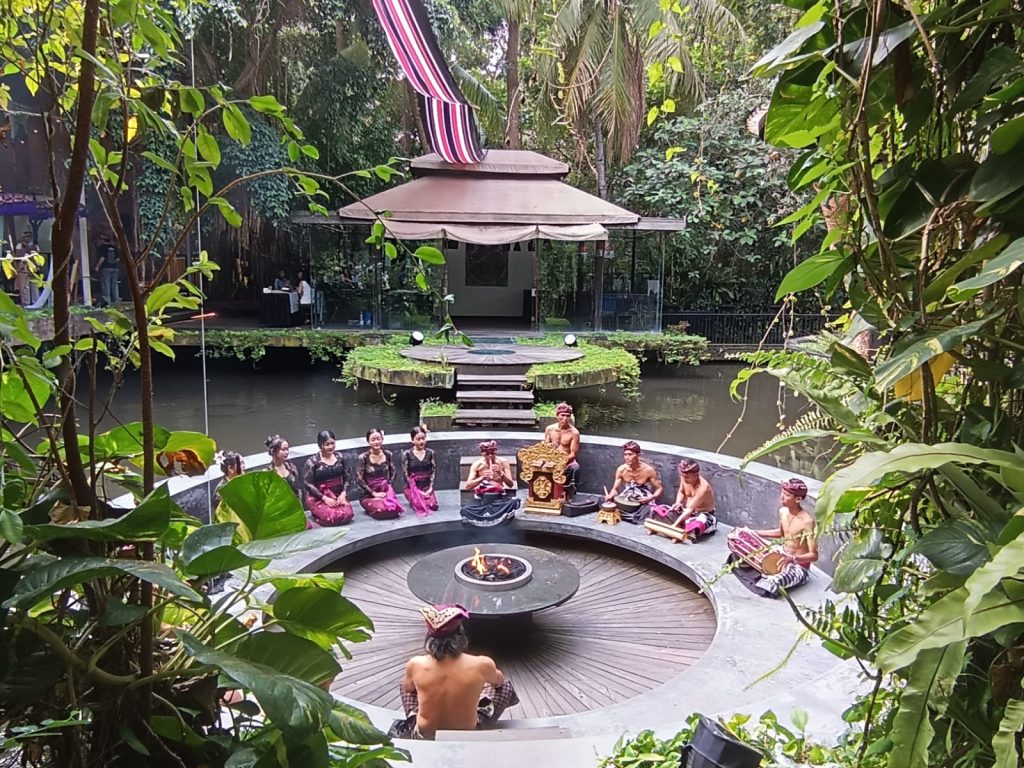
Genjek Pondok Pekak, Ubud kicks off Ubud FolkFest 2026 at Biji World, Ubud/Photo: buda
Sarah sees community support as one of the festival’s greatest strengths. For this reason, she hopes Ubud FolkFest will continue to grow organically without losing its connection with the community and artists who have been part of its journey.
A similar view is shared by Ida Bagus Oka Genijaya, founder of Ubud FolkFest and owner of Biji World. For him, art and culture should not simply be discussed or turned into slogans.
“The roots of this republic are art and culture. In Balinese Hindu philosophy, culture is the mother—something that gives birth. Therefore, art and culture need to be planted, protected, and, most importantly, practiced.”
Oka believes art and culture are increasingly being used as part of tourism discourse. Yet, he argues, they should also remain present in everyday life.
He recalls his father’s advice, comparing philosophy to a blanket: “Why use a blanket when the weather is hot?”
For Oka, art and culture must be practiced. That is why the presence of artists, musicians, and cultural practitioners at Ubud FolkFest is important. They are not simply performers; they help bring the creative space to life.
A People’s Festival in Ubud
Rizal Hadi, founder of Ubud FolkFest, explains that the word “folk” in the festival’s name refers to the people. “So, simply put, Ubud FolkFest is a people’s festival held in Ubud,” he said.
That is also why the festival does not limit itself to a particular musical genre. Rock, jazz, hip-hop, traditional music, and contemporary music can all share the same space.
For Rizal, what matters is not the number of musicians or the size of their names, but the quality of their work. “What matters most to us is quality over quantity,” he said.
The success of the festival, he added, should not be measured only by the number of visitors. More importantly, it is about what they take home with them. “What matters more is what they take home.”
That experience is what Ubud FolkFest hopes to continue building. Visitors come to listen to music, discover artworks, experience cultural performances, take part in creative activities, and meet new people.
Ultimately, Ubud FolkFest aims to be a meeting place—a space where art, music, culture, and people can come together without barriers.
Like the name Biji World, the festival’s home, art and culture also need time to grow. They must be planted, nurtured, and practiced today so they can remain alive for generations to come. [buda]