

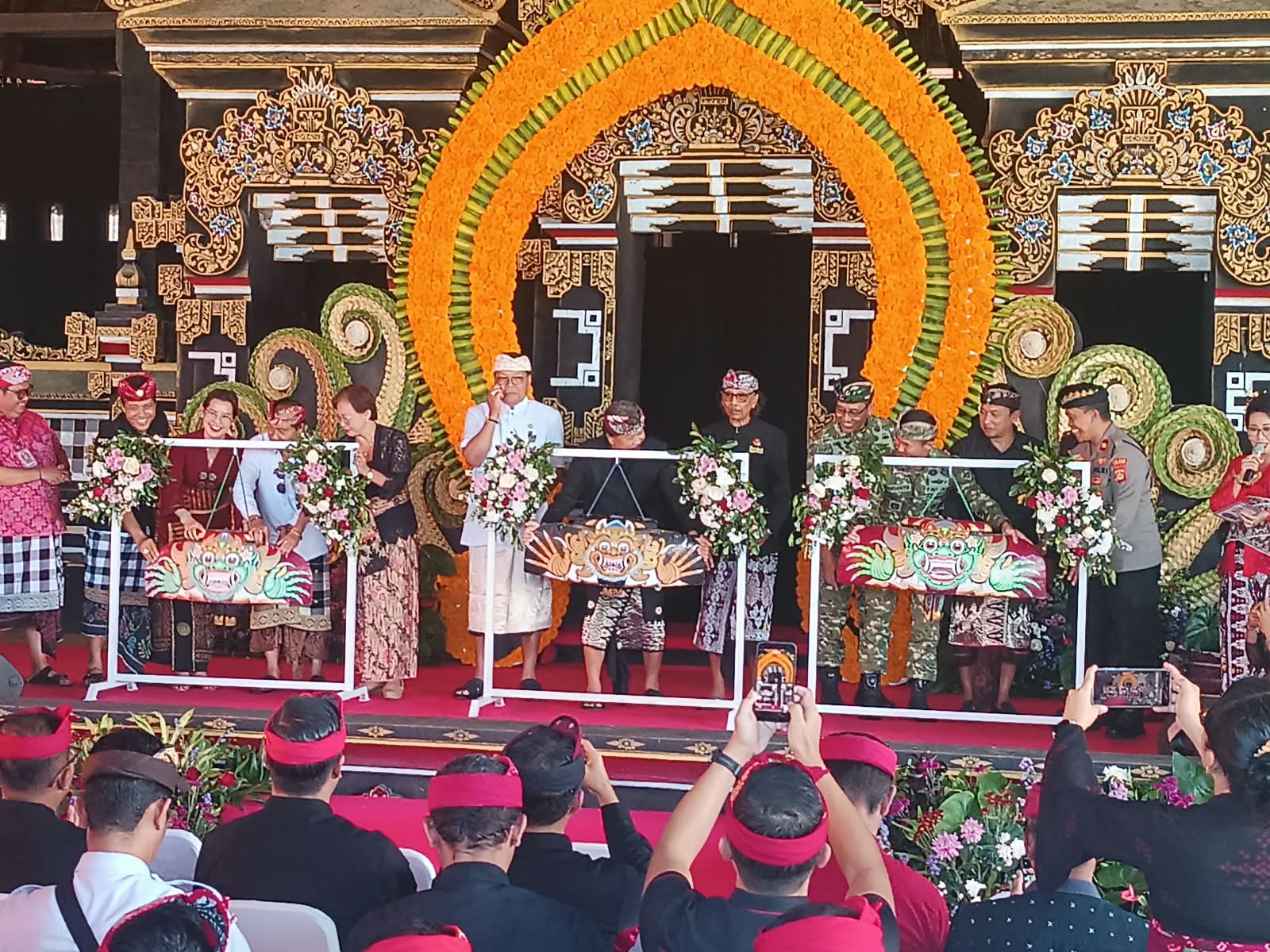
TABANAN, balitourismnow.com – The deep rhythm of okokan—a traditional wooden instrument from Tabanan—echoed through Tanah Lot on Friday, August 28, 2026, marking the opening of the seventh Tanah Lot Art & Food Festival.
“Dug dug, dag, dug dug.., dag dug dag…, jedug kapak, jedug kapan…!”
Accompanied by the sound of drums, the okokan was played in unison as three dancers dressed as white, red, and black monkeys performed energetic movements, leaping like monkeys in the trees. The procession welcomed Tabanan Deputy Regent I Made Dirga, S.Sos.., who was greeted with flower garlands by Jegeg-Bagus Tabanan before proceeding to the Wantilan of Tanah Lot Temple.
The cultural procession set the tone for a festival that celebrates Tabanan’s artistic heritage, traditions, culinary richness, and tourism potential. Upon arrival, the delegation was welcomed by the Singgasana dance, one of Tabanan’s signature traditional dances. The festival was officially opened with the ceremonial striking of the okokan.
This year’s festival carries the theme “Samudra Sakti Raksanam Jagat Samyaya,” reflecting the spirit of protecting the power of the ocean while maintaining harmony and balance in the universe.
Located at Tanah Lot, one of Bali’s iconic tourist destinations, the festival brings together traditional performances, local cuisine, handicrafts, and community creativity. Deputy Regent Dirga, who represented the Tabanan Regent at the opening, said the event should serve not only as entertainment but also as a platform for preserving local culture and supporting the community.
“Festival seperti ini bukan hanya tentang hiburan, tetapi bagaimana kita bersama-sama menjaga seni, budaya dan tradisi yang kita miliki. Tanah Lot memiliki daya tarik yang luar biasa, sehingga keberadaan festival ini harus kita manfaatkan untuk memperkenalkan potensi Tabanan kepada masyarakat yang lebih luas,” ujar Dirga.
He also emphasized that tourism development should go hand in hand with cultural preservation and community empowerment, creating opportunities for artists, small and medium-sized enterprises, creative economy players, and local communities.
“Tourism must benefit the community. When tourists visit, we certainly hope for more than just their enjoyment of natural beauty and culture; we also want to see economic activity involving the local community, UMKM, and creative economy players. This is something we must continue to foster together,” added Dirga.
Beyond the opening ceremony, visitors were invited to explore traditional culinary offerings and handicraft exhibitions. Local specialties included nasi be gulung, tipat blayag, ulam carik, kuah kakul, kakul suna cekuh, rujak tibah, and various Balinese sweets. Some traditional dishes and drinks were also offered free of charge.
The cultural stage presented a succession of Balinese dances, including Kembang Girang, Oleg Tamulilingan, Tenun, Merak Angelo, Condong, Cendrawasih, Margapati, Legong Maha Widya, and Truna Jaya. Traditional performances such as Barong Bangkung and Barong Macan added to the atmosphere as the afternoon progressed.
The festival continued into the evening with performances by Beni & Band, Lepas Landas, Vexer, Joged Bumbung from Dalem Yangapi Traditional Village, Gek Rai Koplo, Nongcret Dewata, and YS Bali. The night culminated with a lively performance by Jun Bintang.
Through the combination of traditional arts, culinary heritage, music, and community participation, Tanah Lot Art & Food Festival VII offers visitors more than entertainment. It provides a window into Tabanan’s living culture while reinforcing Tanah Lot’s role as an important destination for cultural and tourism experiences in Bali.